Welcome to
Zach Rains
A portfolio site for a soon to be college graduate.
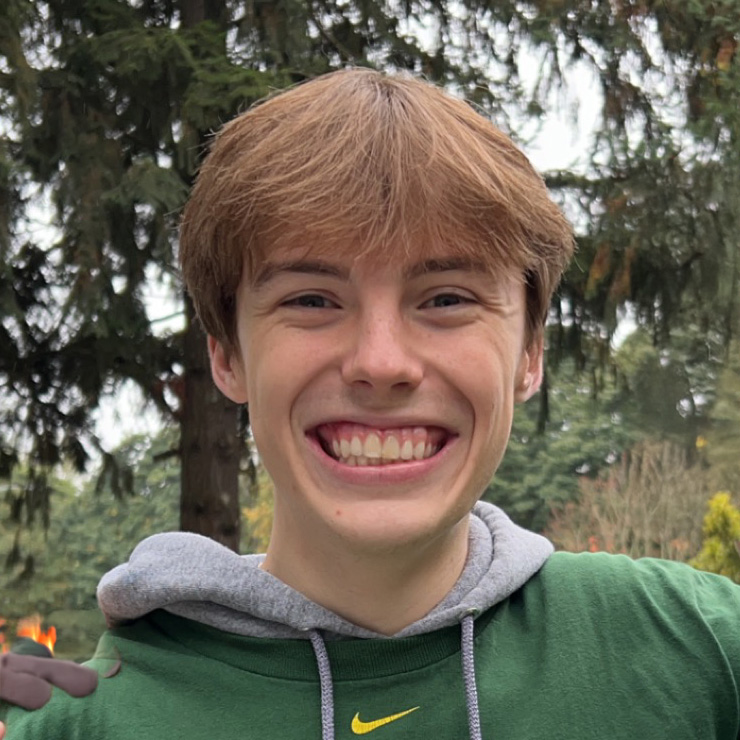
I am a junior at the University of Oregon pursuing my education in advertisng with a minor in sports business. Outside of school I work within my fraternity Chi Psi as their Philanthropy Chair and now Social Chair. In the philanthropy chair I work with local non-profits in order to raise donations and money for their work in supporting our community. As social chair I worked heavily in order to advertise my fraternity events and increase our image on campus.
zach-headshot
Zach Rains


THE I-5 Bandit
Who’s behind the graffiti tag “Rango” Spanning across the pacific northwest?
By Zach Rains
Part 1:
June 9, 2025
Beatriz Mira
Managing Editor
Portland Monthly Magazine
329 NE Couch St #200,
Portland, OR 97232.
Dear Portland Magazine,
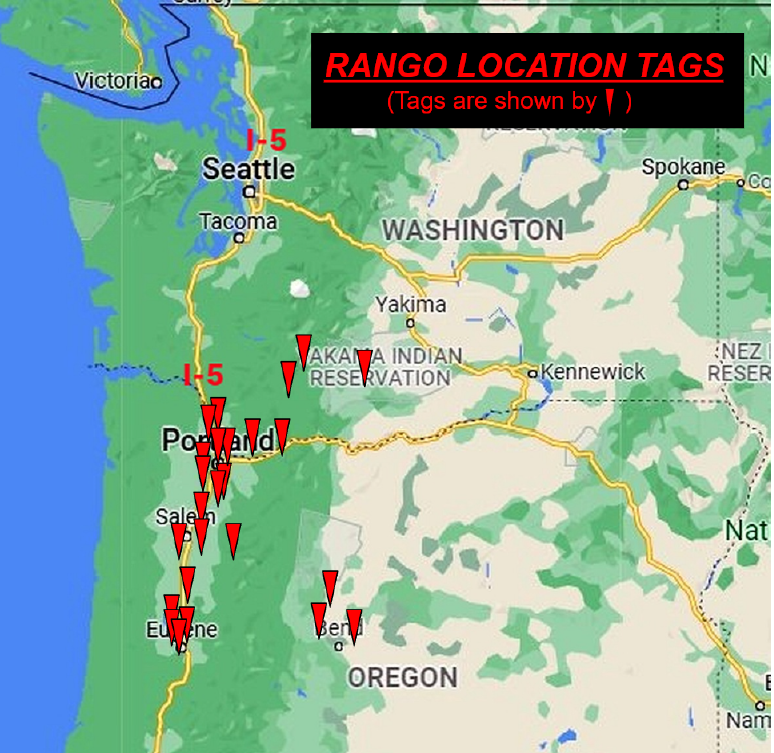
I’m pitching a personal and visual story about the mysterious graffiti tag “Rango” that spans Oregon’s I-5 highway, which I’ve seen over 25 times from Eugene to Seattle. Growing up in Portland and driving downtown through the graffiti-lined highways of I-5 to play club soccer got me hooked on graffiti for the first time. I always loved looking at graffiti but it never came to me to look out for tags. But one day that changed, thanks to when my friend Noah remarked nonchalantly, “Hey, look out for the Rango tag on your way to Eugene,”. During my trip back mindlessly searching for graffiti as I always do, I saw the tag but I recognized it this time, it was Rango. I said to myself that’s funny. But then I saw it again. But then again. I was addicted before I realized it. This multimedia story will explore the meaning of graffiti in our community while also going on a personable search for the anonymous tag or taggers behind the tag. I will be combining my images, a location map of various tags across Eugene to Seattle, and interviews with Portlanders and local graffiti artists about local culture and knowledge. This story is part mystery, part local culture, and 100% Portland.
Sincerely,
Zach Rains
Part 2:
This story begins small, but it has grown into something I can’t stop thinking about. Graffiti has always been an interest of mine, having grown up in Portland. Driving downtown for club soccer games as a kid, I remember staring out the window at all the graffiti tags and pieces covering the great walls, bridges, and buildings of the highway. For me, it was simply a component of what made Portland feel like Portland. But it wasn’t until a random moment years later that I truly started paying attention to graffiti and having a passion for looking out for it. Right before heading back to college, my friend Noah casually said, “Look out for the Rango tag on your way back to Eugene.” At first, I thought to myself that it was funny recognizing it. But then I saw it again. But then again. I was addicted before I realized it.
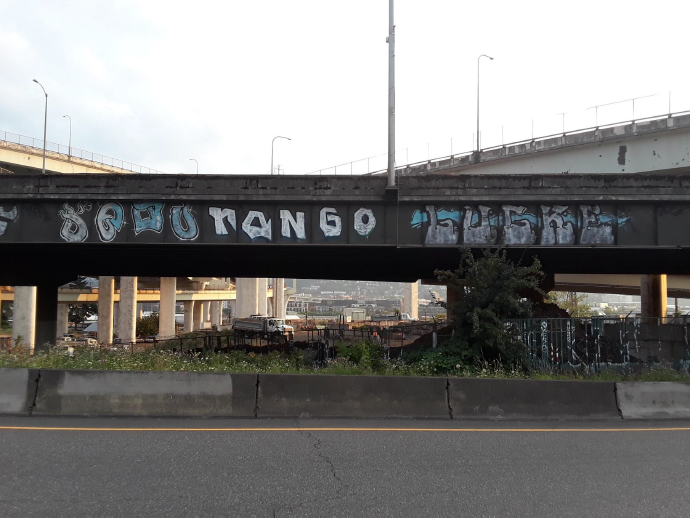
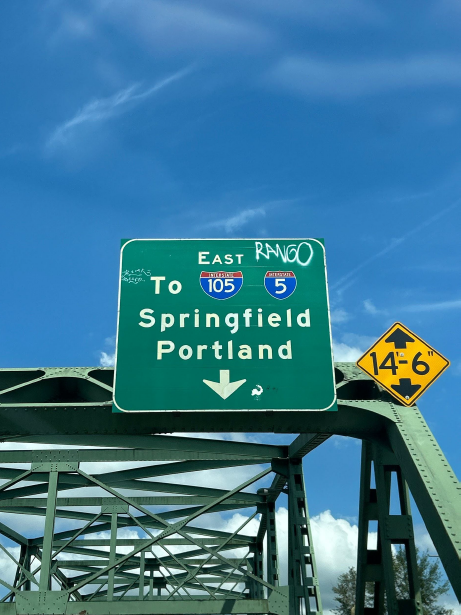
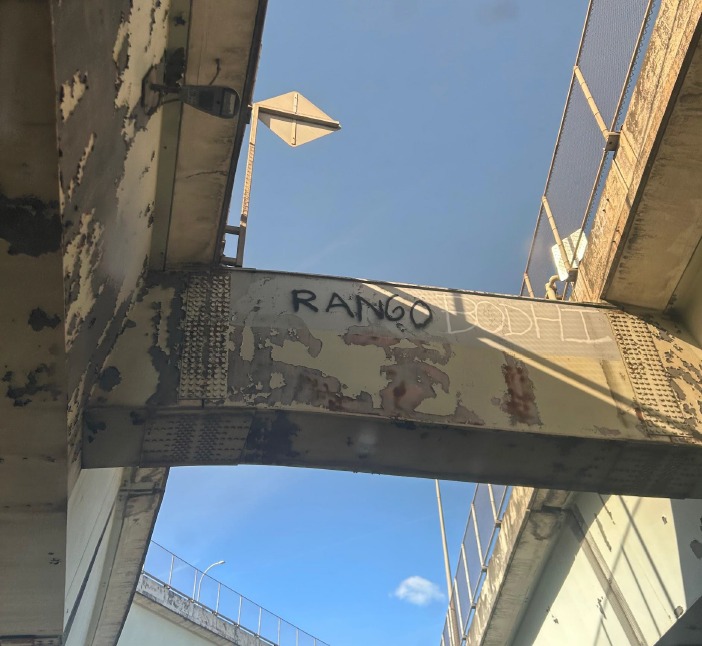
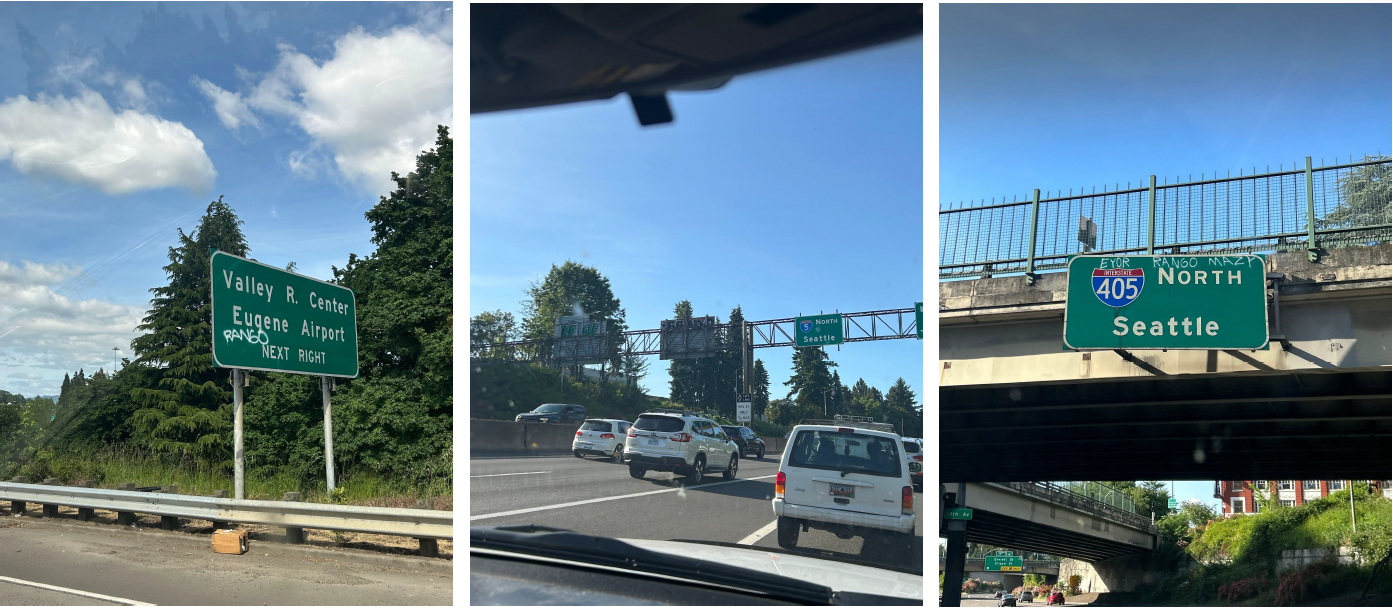
That simple tip turned into a quiet obsession. I’ve discovered Rango tags throughout Oregon in the past three years. I have seen them on random back roads in Eastern Oregon, downtown Portland, Eugene’s side streets, and even moving up into Washington, almost halfway to Seattle. The placement of the tag is what distinguishes it from others; typically, it is fairly simple, simply bearing the name “Rango.” Which is quite boring but what’s interesting is that it is always open, and challenging to reach areas, often facing roads so you can see his name. They can be seen on bridges, interstate signs, and overpasses, among other locations that make you wonder, “How did someone even get up there?” Rango seems to wish to remain anonymous as from my research I haven’t been able to find him online. This is why I want to go on a personable hunt to find who’s behind the tag as well as learn more about Portland graffiti.
This story will follow my journey to try and find out who Rango is but it’s also about more than that. It’s about understanding Portland’s graffiti scene, learning from the artists who live in it, and talking with the people who see it every day. I want to include short interviews with graffiti writers, Portland day-to-day citizens, and maybe even a city official who knows the legal side of it all. The story will include my photos of Rango tags and a map I made that shows how far the name has spread. I want this to feel like a local mystery anyone can get into. Even if you’ve never noticed the name “Rango,” chances are, you’ve seen it without realizing it.
The challenge I face with this personable journalist piece is what would happen if I did locate Rango? Should I tell them who they are? Or should I conceal who they are? That seems to me to be a major aspect of graffiti from my knowledge. It is an art to remain nameless. In the end, I plan to keep Rango’s identity private if I do find them as being anonymous comes hand in hand with Graffiti. Lastly, this isn’t just a graffiti story about Rango. It’s a story about how I see my city, how art exists in public, and how people express themselves in hidden ways. I think Portlanders but especially young people will see a part of themselves in this story and find this local mystery very interesting.
Part 3:
This story is for Portlanders, especially the younger audience with people ages 18 to 35 who care about the city, art, and the small things that make Portland feel like Portland. It’s for locals who have always noticed graffiti but have never given it much thought as to who might be responsible. I believe it will appeal to anyone who appreciates street art, takes in sights while traveling through the city, or simply likes a good local mystery. It’s also intended for those who wish to become more aware of their surroundings and perhaps even begin to spot Rango tags themselves, whether they are on their regular commute, in the area around their neighborhood, or while taking a chance trip along I-5.
The format will be an online multimedia article. I’ll add my images of Rango’s tags, a personalized map with the locations of Rango’s tags I’ve located, across Eugene to Seattle as well as interviews with Portland day-to-day residents and graffiti artists. I want it to seem exciting, visual, and personal. The tone is curious, as if I’m picking up knowledge along the road. I will be the protagonist telling the story as well as interviewing and putting the story together as we explore and learn more about local graffiti and Rango in Oregon. I will be interviewing Portland locals on their opinions of graffiti and whether they like it or not in their city. I will also be interviewing a graffiti artist to help me find Rango as well as give me local insight on graffiti. Lastly, the central conflict is me trying to find Rango who is the antagonist of his allusiveness. However the problem here lies in my respect for graffiti culture. If I find him, do I reveal who he is, or protect his identity? What does he want? What happens?
Part 4:
I read and watched a number of resources about Portland’s street art, graffiti history, and tagging in order to better understand how this story might unfold and how to approach it with respect for graffiti culture as well as in a legal light. The Portland Street Art Alliance website, which provided me with a timeline of how graffiti has influenced the city’s appearance and identity, was one of the most beneficial tools I had. To learn more about the dangers Rango and others face when they tag, I also reviewed Oregon’s graffiti regulations. I also decided to watch the Vice documentary “Why We Tag” which was located in Oregon but was interesting and helped me see graffiti from other artists’ standpoints and also why they do it. I found it very interesting that most taggers do it as a form of expression, not fame, and often as a way to stay out of trouble even though it’s illegal. That truly got me to consider the importance of maintaining one’s privacy and the reasons in the end decided to keep Rango’s identity a secret.
I also looked at community spaces online where people talk about graffiti even locally within Portland/Eugene. Rango is all over the city, so I was able to confirm that I wasn’t the only one observing him on Instagram thanks to the account @PDXGraffiti. After that, I discovered a Reddit post from 2018 talking about the Rango tag itself and how it was always hard to get places simple. From this knowledge I was able to know that Rango has been working for at least 7 years, making him older than a youngster and a seasoned pro in my eyes. To find more people who have spotted Rango, I will do interviews with Portland locals who might see the work as well as meet with graffiti locals who might know the tagger under Rango. I might even go deeper into Reddit asking former comments 7+ years ago if they know anymore today. I might be able to improve my timeframe and possibly get more leads as a result.
Sources:
1. Portland Street Art Alliance. “Archives.” PSAA, 2021. https://www.pdxstreetart.org/
(Offers a full history of Portland’s street art scene and how it’s changed over time)
2. Oregon State Legislature. “ORS 164.381: Definitions for ORS 164.381 to 164.388.” OregonLaws.org, 2023. https://www.oregonlaws.org/ors/164.381
(Explains Oregon’s graffiti laws, including what counts as criminal mischief and possible punishments)
3. Vice. “Why We Tag.” YouTube, uploaded by VICE, 2018. https://www.youtube.com/watch?v=W0b0eZt5R3o
(Short video featuring graffiti artists explaining their reasons for tagging and staying anonymous)
4. @PDXGraffiti. Instagram Profile. Accessed June 2025. https://www.instagram.com/pdxgraffiti/
(A community-run page that shows local tags, including many Rango sightings)
5. Chaostown. “Portland Is Losing the Graffiti War.” YouTube, 2022. https://www.youtube.com/watch?v=ZsoZmEaH8I8
(Local video that interviews artists and critiques the city’s clean-up efforts and graffiti removal)
6. u/graffitihawk. “Rango tag seen everywhere.” Reddit, 2021. https://www.reddit.com/r/Portland/comments/q8dj1a/rango_tag_seen_everywhere/
(A Reddit thread where locals talked about spotting Rango’s tag as far back as 5+ years ago)
Part 5:
Rango Examples